Money for The Rest of Us

Investment help and financial guidance for the rest of us.

  • Podcast
  • Guides
        • Asset Classes

        • A Complete Guide to Investing in I Bonds and TIPS (2025)
        • A Complete Guide to Equity REIT Investing
        • A Complete Guide to Mortgage REIT Investing
        • A Complete Guide to Investing in Gold
        • A Complete Guide To Investing In Convertible Bonds
        • Investing in Bitcoin, Oil, and Volatility ETFs
        • Carbon Investing and its Effect on Climate Change
        • Farmland Investing
        • The Opportunity and Risk of Frontier Markets
        • Investment Vehicles

        • A Complete Guide to Investment Vehicles
        • How to Invest in Closed-End Funds
        • What Are SPACs and Should You Invest in Them?
        • Economics and Strategy

        • A Complete Guide to Understanding and Protecting Against Inflation
        • Why You Should Rebalance Your Portfolio
        • What Is Risk vs Uncertainty?
        • Tail Events and Tail Risk
        • Understanding Web3 Investing
        • General

        • David's Most Influential Books
        • Topic Index
        • Glossary
  • Model Portfolios
        • Model Portfolios

        • Ultra Conservative Model Portfolio
        • Conservative Model Portfolio
        • Moderate Model Portfolio
        • Moderately Aggressive Model Portfolio
        • Aggressive Model Portfolio
        • Role-Based Model Portfolio
        • Equity Model Portfolio
        • Income Model Portfolio
        • Fixed Income Model Portfolio
        • Implementation

        • Model Portfolio Overview and FAQ
        • Model Portfolio Example Video
        • How to Select and Implement a New Portfolio Mix
        • Determining Whether To Sell A Taxable Holding
        • Portfolio Rebalancing
        • Calculating Investment Performance
        • Portfolio Resources

        • David’s Current Portfolio
        • David's Portfolio Trades
        • Model Portfolios Performance and Risk
        • Model Portfolio Holding Explanations
        • Model Portfolio Changes
        • Model Portfolio Alternatives for UCITS, TSP, and Others
        • Example Index Mutual Funds and ETFs
  • Members
        • General Resources

        • Plus Member Home
        • Member - Getting Started Guide
        • Member Forums
        • Submit A Question to the Plus Podcast
        • Member Tools and Downloads
        • Analysis Tools

        • Current Investment Strategy Report
        • Plus Premium Podcast
        • Categorizing Your Portfolio Spreadsheet
        • Asset Allocation Model (Spreadsheet)
        • Retirement Planning Calculator
        • Retirement Spending Calculator
        • All Investment Conditions Reports
        • Courses

        • Asset Allocation and Portfolio Lessons
        • Investing in Closed-End Funds
  • Join
  • Log In
You are here: Home / Podcast / 27: What Is The Right Price?

27: What Is The Right Price?

October 22, 2014 by David Stein · Updated October 28, 2021

The right price for something is dependent on our state of mind. Anchoring, mental accounts and other behavioral tricks we rely on when buying.

Photo by Dolly's Bookstore
Photo by Dolly’s Bookstore

In this episode, you’ll learn:

  1. Why does it feel like you are overpaying when you pay $27.95 for a book.
  2. What is anchoring and mental accounting and why we find it easier to pay for a sit-down dinner versus a hardbound book.
  3. What makes us happier, buying things or buying experiences.
  4. Why we are willing to pay much more for unique experiences.
  5. Why economists worry about our behavior during periods of deflation.
  6. Why you can’t buy a vintage camper trailer in Idaho even though they are everywhere.
  7. What is the right price?

Show Notes

Dolly’s Bookstore Park City, Utah

Sense of Style by Steven Pinker

21st Century Herbal

Thinking, Fast and Slow by Daniel Kahneman

Buy Experiences Not Things by James Hamblin

Waiting for Merlot – Anticipatory Consumption of Experiential and Material Purchases by Amit Kumar, Matthew A. Killingsworth and Thomas Gilovich

Become a Better Investor With Our Investing Checklist
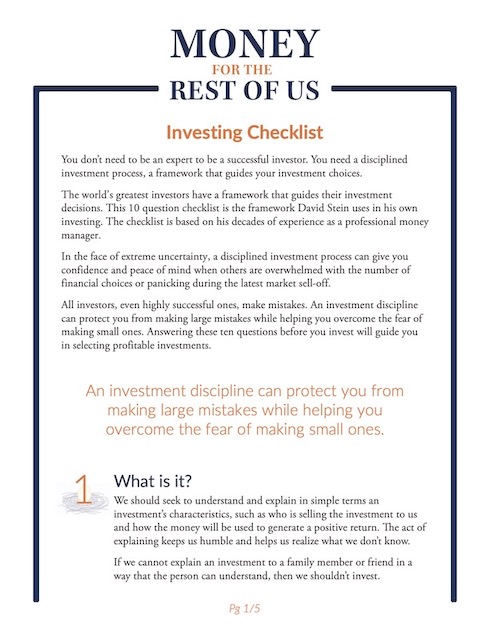
Become a Better Investor With Our Investing Checklist

Master successful investing with our Checklist and get expert weekly insights to help you build your wealth with confidence.

This site is protected by reCAPTCHA and the Google Privacy Policy and Terms of Service apply.

Summary Article

Overpaying For Books: A Case Study in Behavioral Economics

I recently visited Dolly’s Bookstore in Park City, Utah. I like this store because it has a homey feel with hardwood floors, tall wood shelves that form little nooks that feel sheltering as you browse, and it has a fluffy cat.

The book selection is good with classics and new releases, hardbounds and paperbacks. The store is small so the collection is thoughtfully curated.

Dolly’s is on Main Street and sits behind a chocolate store. Books and chocolate. Who could ask for more?

I decided to buy a book. I had recently read a sample of Steven Pinker’s new book on writing, A Sense of Style. I liked it so it seemed like a good choice.

Ebooks Versus Physical Books

I can’t remember the last time I bought a new hardbound book at a bookstore. I like the convenience of eBooks because I can highlight passages without feeling like I am defacing the page. I like the ability to quickly find sections I want to reread based on a keyword search. I like that I can carry hundreds of books with me on my Kindle or iPad and I don’t have to dust them. And I like that most eBooks cost $10 or less.

Sometimes, though, it feels good to hold a physical book and turn real pages.

Entertainment Premiums

I found Pinker’s book on the shelf. It was $27.95. Ouch.

I could buy the same hardbound book on Amazon for $16.77 including shipping, and it would arrive at my home in two days. Or I could buy the eBook for $12.99, which is high for an eBook but 45% cheaper than buying the book at Dolly’s.

I felt the book in my hands. It didn’t feel very thick for $27.95. Maybe it wasn’t even that good. I put it back on the shelf.

I knew why Dolly’s was asking $27.95 for the book. Rent on Main Street in Park City is expensive. Workers that curate the book collection need to be paid. There’s cat food to buy and power bills to pay.

I told myself I was really paying $17 for the book and $10.95 for the opportunity to experience the homey feel at Dolly’s.

It still felt like I was overpaying.

Anchoring and Mental Accounting

I’d fallen victim to what in behavioral economics is known as anchoring and mental accounting.

I’m so accustomed to paying $10 for books that in my mind that is what books ought to cost so if I pay more than that I feel like I’m overpaying. $10 is my anchor price for books.

Yet, I paid more than $27.95 for dinner that evening with my daughter at a Vietnamese restaurant down the street from the bookstore, and I didn’t feel like I was overpaying.

Restaurant charges fall under a different mental account. Yes, sit-down meals are more expensive than carryout, but you pay for the atmosphere, the service and the use of glass plates and silverware.

Why was I willing to pay a premium for those niceties at a restaurant but when asked to do so at a bookstore I felt ripped off?

That is the power of anchoring. It is why physical bookstores are struggling across the country. It is why the U.S. garment industry has been obliterated by cheap imports. $15 is the new anchor price for shirts.

Buying A More Expensive Book

How could I overcome the power of anchoring and support Dolly’s Bookstore without feeling like I had overpaid?

In the end, my daughter solved the problem for me. She found a book she wanted, 21st Century Herbal – A Modern Encyclopedia of Herbs.

It was $35. But it was also thick and heavy—a hardbound book of 500 pages with color glossy photos.

I checked the price of the book on Amazon using my phone. $26.03.

We left the store with the herb book, and I felt good about it.

Why? In this case, the physical book felt superior to the eBook because the encyclopedic content was presented on paper in a way that was easier to absorb.

I still paid an “entertainment” premium to shop at Dolly’s versus buying on Amazon, but with the herb book that premium was $9 instead of almost $11 for Pinker’s book.

That’s only a $2 difference, but it felt much less because the premium was only 26% of the herb book price versus 40% for the writing book. That’s another example of mental accounting.

Ready to get serious about your investing?

Access professional-grade portfolio tools, training, and a community to help you stay on track, tune out the noise, and grow your wealth with confidence.

Learn How

Filed Under: Podcast Tagged With: behavioral finance

Contact | Team | Topic Index


Darby Creek Advisors LLC
P.O. Box 68544 • Tucson, AZ • 85737

Copyright © 2026 • Disclosures, Privacy Policy, and Cookie Policy • Site by Tempora

Manage Cookie Consent

We use cookies to optimize our website, marketing, and services. 

Functional Always active
The technical storage or access is strictly necessary for the legitimate purpose of enabling the use of a specific service explicitly requested by the subscriber or user, or for the sole purpose of carrying out the transmission of a communication over an electronic communications network.
Preferences
The technical storage or access is necessary for the legitimate purpose of storing preferences that are not requested by the subscriber or user.
Statistics
The technical storage or access that is used exclusively for statistical purposes. The technical storage or access that is used exclusively for anonymous statistical purposes. Without a subpoena, voluntary compliance on the part of your Internet Service Provider, or additional records from a third party, information stored or retrieved for this purpose alone cannot usually be used to identify you.
Marketing
The technical storage or access is required to create user profiles to send advertising, or to track the user on a website or across several websites for similar marketing purposes.
  • Manage options
  • Manage services
  • Manage {vendor_count} vendors
  • Read more about these purposes
View preferences
  • {title}
  • {title}
  • {title}
Manage Cookie Consent
We use cookies to optimize our website, marketing, and services. We never sell users' data.
Functional Always active
The technical storage or access is strictly necessary for the legitimate purpose of enabling the use of a specific service explicitly requested by the subscriber or user, or for the sole purpose of carrying out the transmission of a communication over an electronic communications network.
Preferences
The technical storage or access is necessary for the legitimate purpose of storing preferences that are not requested by the subscriber or user.
Statistics
The technical storage or access that is used exclusively for statistical purposes. The technical storage or access that is used exclusively for anonymous statistical purposes. Without a subpoena, voluntary compliance on the part of your Internet Service Provider, or additional records from a third party, information stored or retrieved for this purpose alone cannot usually be used to identify you.
Marketing
The technical storage or access is required to create user profiles to send advertising, or to track the user on a website or across several websites for similar marketing purposes.
  • Manage options
  • Manage services
  • Manage {vendor_count} vendors
  • Read more about these purposes
View preferences
  • {title}
  • {title}
  • {title}