Money for The Rest of Us

Investment help and financial guidance for the rest of us.

  • Podcast
  • Guides
        • Asset Classes

        • A Complete Guide to Investing in I Bonds and TIPS (2025)
        • A Complete Guide to Equity REIT Investing
        • A Complete Guide to Mortgage REIT Investing
        • A Complete Guide to Investing in Gold
        • A Complete Guide To Investing In Convertible Bonds
        • Investing in Bitcoin, Oil, and Volatility ETFs
        • Carbon Investing and its Effect on Climate Change
        • Farmland Investing
        • The Opportunity and Risk of Frontier Markets
        • Investment Vehicles

        • A Complete Guide to Investment Vehicles
        • How to Invest in Closed-End Funds
        • What Are SPACs and Should You Invest in Them?
        • Economics and Strategy

        • A Complete Guide to Understanding and Protecting Against Inflation
        • Why You Should Rebalance Your Portfolio
        • What Is Risk vs Uncertainty?
        • Tail Events and Tail Risk
        • Understanding Web3 Investing
        • General

        • David's Most Influential Books
        • Topic Index
        • Glossary
  • Model Portfolios
        • Model Portfolios

        • Ultra Conservative Model Portfolio
        • Conservative Model Portfolio
        • Moderate Model Portfolio
        • Moderately Aggressive Model Portfolio
        • Aggressive Model Portfolio
        • Role-Based Model Portfolio
        • Equity Model Portfolio
        • Income Model Portfolio
        • Fixed Income Model Portfolio
        • Implementation

        • Model Portfolio Overview and FAQ
        • Model Portfolio Example Video
        • How to Select and Implement a New Portfolio Mix
        • Determining Whether To Sell A Taxable Holding
        • Portfolio Rebalancing
        • Calculating Investment Performance
        • Portfolio Resources

        • David’s Current Portfolio
        • David's Portfolio Trades
        • Model Portfolios Performance and Risk
        • Model Portfolio Holding Explanations
        • Model Portfolio Changes
        • Model Portfolio Alternatives for UCITS, TSP, and Others
        • Example Index Mutual Funds and ETFs
  • Members
        • General Resources

        • Plus Member Home
        • Member - Getting Started Guide
        • Member Forums
        • Submit A Question to the Plus Podcast
        • Member Tools and Downloads
        • Analysis Tools

        • Current Investment Strategy Report
        • Plus Premium Podcast
        • Categorizing Your Portfolio Spreadsheet
        • Asset Allocation Model (Spreadsheet)
        • Retirement Planning Calculator
        • Retirement Spending Calculator
        • All Investment Conditions Reports
        • Courses

        • Asset Allocation and Portfolio Lessons
        • Investing in Closed-End Funds
  • Join
  • Log In
You are here: Home / Podcast / 388: Will Quantitative Tightening Lead To Even Greater Financial Losses?

388: Will Quantitative Tightening Lead To Even Greater Financial Losses?

May 25, 2022 by David Stein · Updated June 15, 2022

How financial markets and the economy performed last time the Federal Reserve took away the punch bowl by raising its policy rate and pursuing quantitative tightening. Things worked out fine that time. Will it be different this time?

Complex tile floor with caption saying "Quantitative Tightening"

Topics covered include:

  • Where did the phrase take away the punch bowl come from
  • How central bank actions can slow the economy and lower inflation.
  • The difference between having cash and having wealth
  • How quantitative easing and quantitative tightening work
  • What happened last time the Federal Reserve pursued quantitative tightening

Show Notes

Address before the New York Group of the Investment Bankers Association of America on October 19, 1955, by William McChesney Martin, Jr.—FRASER

M2—Federal Reserve Economic Data

Assets: Total Assets: Total Assets: Wednesday Level—Federal Reserve Economic Data

Assets: Securities Held Outright: U.S. Treasury Securities: All: Wednesday Level—Federal Reserve Economic Data

Americans Reported Strong Personal Finances Late Last Year, Fed Finds by David Harrison—The Wall Street Journal

Episode Sponsors

FarmTogther – Your farmland investment manager

LinkedIn – Post your job for free

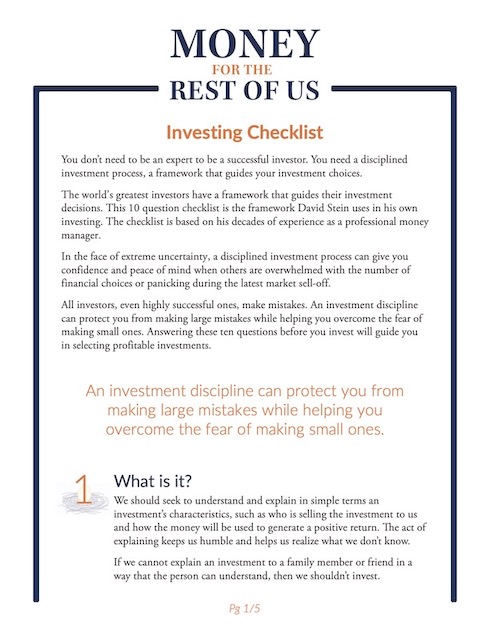
Become a Better Investor With Our Investing Checklist
Become a Better Investor With Our Investing Checklist

Master successful investing with our Checklist and get expert weekly insights to help you build your wealth with confidence.

This site is protected by reCAPTCHA and the Google Privacy Policy and Terms of Service apply.

Related Episodes

270: Repo Rates Soared—Here’s Why It Matters

295: Federal Reserve Insolvency and Monetizing the National Debt

312: What the Federal Reserve’s New Policies Mean For Your Finances

Transcript

Welcome to Money For the Rest of Us. This is a personal finance show on money, how it works, how to invest it, and how to live without worrying about it. I’m your host, David Stein. Today’s episode—388. It’s titled “Will Quantitative Tightening Lead To Even Greater Losses For Financial Assets?”  

Taking Away the Punch Bowl

In 1955, William McChesney Martin Jr, the Federal Reserve Chair, the longest-serving chair, who served from 1951 to 1970, he gave his speech before the New York group of the Investment Banking Association of America. 

In this speech, he said, “In the field of monetary and credit policy, precautionary action to prevent inflationary excesses is bound to have some onerous effect. If it did not, it would be ineffective and futile. Those who have the task of making such policy don’t expect you to applaud. The Federal Reserve, as one writer put it, is in the position of the chaperone who has ordered the punch bowl removed, just when the party was really warming up.”

Ever since then, the phrase “take away the punch bowl” has been associated with central bank actions to slow economies in which inflation is too high, or at risk of getting too high. 

Central bank actions to take away the punch bowl include raising short-term interest rates and quantitative tightening. 

In this episode, we’ll explore what those actions mean, and what happened the last time the Federal Reserve initiated quantitative tightening. 

The Temptation to Panic

This is important because financial markets are absolutely freaking out. Stock markets are down sharply this year. Bond prices have fallen. Cryptocurrency is cratering. 

Pundits are predicting a recession, stagflation, or other calamities. Investors and fund managers are incredibly pessimistic, the most bearish they’ve been since March 2020, at the start of the COVID-induced economic shutdown. 

As a Money For the Rest of Us Plus member, you are able to listen to the podcast in an ad-free format and have access to the written transcript for each week’s episode. For listeners with hearing or other impairments that would like access to transcripts please send an email to jd@moneyfortherestofus.com Learn More About Plus Membership »

Ready to get serious about your investing?

Access professional-grade portfolio tools, training, and a community to help you stay on track, tune out the noise, and grow your wealth with confidence.

Learn How

Filed Under: Podcast Tagged With: central banks, Federal Reserve, quantitative easing, quantitative tightening

Contact | Team | Topic Index


Darby Creek Advisors LLC
P.O. Box 68544 • Tucson, AZ • 85737

Copyright © 2026 • Disclosures, Privacy Policy, and Cookie Policy • Site by Tempora

Manage Cookie Consent

We use cookies to optimize our website, marketing, and services. 

Functional Always active
The technical storage or access is strictly necessary for the legitimate purpose of enabling the use of a specific service explicitly requested by the subscriber or user, or for the sole purpose of carrying out the transmission of a communication over an electronic communications network.
Preferences
The technical storage or access is necessary for the legitimate purpose of storing preferences that are not requested by the subscriber or user.
Statistics
The technical storage or access that is used exclusively for statistical purposes. The technical storage or access that is used exclusively for anonymous statistical purposes. Without a subpoena, voluntary compliance on the part of your Internet Service Provider, or additional records from a third party, information stored or retrieved for this purpose alone cannot usually be used to identify you.
Marketing
The technical storage or access is required to create user profiles to send advertising, or to track the user on a website or across several websites for similar marketing purposes.
  • Manage options
  • Manage services
  • Manage {vendor_count} vendors
  • Read more about these purposes
View preferences
  • {title}
  • {title}
  • {title}
Manage Cookie Consent
We use cookies to optimize our website, marketing, and services. We never sell users' data.
Functional Always active
The technical storage or access is strictly necessary for the legitimate purpose of enabling the use of a specific service explicitly requested by the subscriber or user, or for the sole purpose of carrying out the transmission of a communication over an electronic communications network.
Preferences
The technical storage or access is necessary for the legitimate purpose of storing preferences that are not requested by the subscriber or user.
Statistics
The technical storage or access that is used exclusively for statistical purposes. The technical storage or access that is used exclusively for anonymous statistical purposes. Without a subpoena, voluntary compliance on the part of your Internet Service Provider, or additional records from a third party, information stored or retrieved for this purpose alone cannot usually be used to identify you.
Marketing
The technical storage or access is required to create user profiles to send advertising, or to track the user on a website or across several websites for similar marketing purposes.
  • Manage options
  • Manage services
  • Manage {vendor_count} vendors
  • Read more about these purposes
View preferences
  • {title}
  • {title}
  • {title}