Money for The Rest of Us

Investment help and financial guidance for the rest of us.

  • Podcast
  • Guides
        • Asset Classes

        • A Complete Guide to Investing in I Bonds and TIPS (2025)
        • A Complete Guide to Equity REIT Investing
        • A Complete Guide to Mortgage REIT Investing
        • A Complete Guide to Investing in Gold
        • A Complete Guide To Investing In Convertible Bonds
        • Investing in Bitcoin, Oil, and Volatility ETFs
        • Carbon Investing and its Effect on Climate Change
        • Farmland Investing
        • The Opportunity and Risk of Frontier Markets
        • Investment Vehicles

        • A Complete Guide to Investment Vehicles
        • How to Invest in Closed-End Funds
        • What Are SPACs and Should You Invest in Them?
        • Economics and Strategy

        • A Complete Guide to Understanding and Protecting Against Inflation
        • Why You Should Rebalance Your Portfolio
        • What Is Risk vs Uncertainty?
        • Tail Events and Tail Risk
        • Understanding Web3 Investing
        • General

        • David's Most Influential Books
        • Topic Index
        • Glossary
  • Model Portfolios
        • Model Portfolios

        • Ultra Conservative Model Portfolio
        • Conservative Model Portfolio
        • Moderate Model Portfolio
        • Moderately Aggressive Model Portfolio
        • Aggressive Model Portfolio
        • Role-Based Model Portfolio
        • Equity Model Portfolio
        • Income Model Portfolio
        • Fixed Income Model Portfolio
        • Implementation

        • Model Portfolio Overview and FAQ
        • Model Portfolio Example Video
        • How to Select and Implement a New Portfolio Mix
        • Determining Whether To Sell A Taxable Holding
        • Portfolio Rebalancing
        • Calculating Investment Performance
        • Portfolio Resources

        • David’s Current Portfolio
        • David's Portfolio Trades
        • Model Portfolios Performance and Risk
        • Model Portfolio Holding Explanations
        • Model Portfolio Changes
        • Model Portfolio Alternatives for UCITS, TSP, and Others
        • Example Index Mutual Funds and ETFs
  • Members
        • General Resources

        • Plus Member Home
        • Member - Getting Started Guide
        • Member Forums
        • Submit A Question to the Plus Podcast
        • Member Tools and Downloads
        • Analysis Tools

        • Current Investment Strategy Report
        • Plus Premium Podcast
        • Categorizing Your Portfolio Spreadsheet
        • Asset Allocation Model (Spreadsheet)
        • Retirement Planning Calculator
        • Retirement Spending Calculator
        • All Investment Conditions Reports
        • Courses

        • Asset Allocation and Portfolio Lessons
        • Investing in Closed-End Funds
  • Join
  • Log In
You are here: Home / Podcast / 546: Do Retiring Baby Boomers Actually Move Markets? And How Much Do Demographics Really Matter

546: Do Retiring Baby Boomers Actually Move Markets? And How Much Do Demographics Really Matter

December 10, 2025 by Camden Stein · Updated December 19, 2025

As Baby Boomers continue to retire, some analysts expect financial markets to feel the strain. We examine whether demographic shifts truly shape stock and bond returns, or what other factors matter more.

Colorful tiles with the captions "Demographics"

Topics covered include:

  • Will retiring baby boomers lead to lower stock prices or higher interest rates
  • Some earlier demographic predictions and how they worked out
  • How do natural interest rates reflect the demand and supply of capital
  • Why demographics are only one factor that determines economic growth and financial market returns

Show Notes

Zeihan

Harry Dent

Measuring the Natural Rate of Interest—Federal Reserve Bank of New York

Distribution of Household Wealth in the U.S. since 1989—The Federal Reserve

Episode Sponsors

Gelt – Taxes Done Right

Delete Me – Use code David20 to get 20% off

Become a Better Investor With Our Investing Checklist
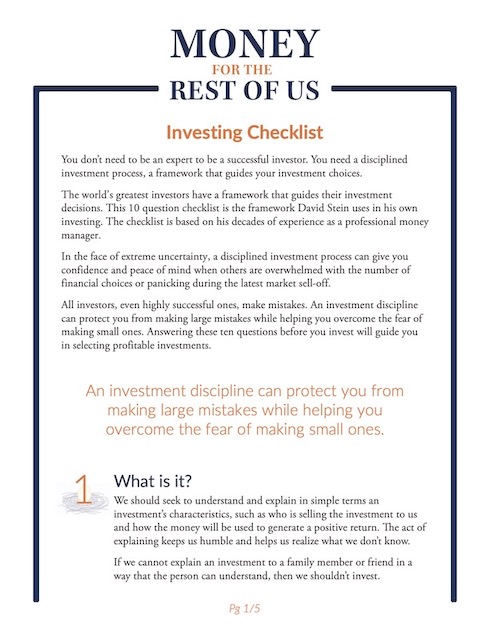
Become a Better Investor With Our Investing Checklist

Master successful investing with our Checklist and get expert weekly insights to help you build your wealth with confidence.

This site is protected by reCAPTCHA and the Google Privacy Policy and Terms of Service apply.

Related Episodes

487: Are We Heading for a 2030s Depression? Global Economic and Population Shifts

445: From Boom to Bust—Why China’s Stocks Lagged Behind Its Economy & Where to Invest Next

395: How Population Trends Will Impact Growth, Inflation, Investing and Well Being

Transcript

Welcome to Money for the Rest of Us. This is a personal finance show on money, how it works, how to invest it, and how to live without worrying about it. I’m your host, David Stein. Today is episode 546. It’s titled “Do Retiring Baby Boomers Actually Move Markets? And How Much Do Demographics Really Matter?”

Baby Boomers and Private Capital

Recently, I got an email from a member of Money for the Rest of Us Plus. He’d been listening to a podcast by strategist Peter Zeihan. Peter says his work intersects geography, demography, and energy. And in this podcast, he was describing what he says is a much bigger problem that’s going on with capital supplies. He contends that most private capital—capital being monetary assets that are invested in corporate projects, such as the AI data center buildout. He says most of it comes from people in their 50s and early 60s, after their kids have moved out and they start massively saving for their retirement.

Now, he suggests it’s 70% of total private capital. That seems high to me. But what he’s worried about now is that now that 80% of America’s baby boomers are retired, they will become more conservative in their investing and move much of those savings from stocks to bonds. And that could potentially move markets. 

This member had some questions regarding the potential impact of the savings that the baby boomers were doing, and then the dissavings they’ll do, and particularly how it could have impacted a variety of asset classes, including corporate bonds, non-investment-grade bonds, where the incremental yield or spread is very, very narrow, and whether that savings action contributed to that. We’ll address that. But first, I want to talk about the whole idea of using demographic trends to make investment predictions.

Demographics and Investing

I first became aware of this approach back in 1999. At the time, I was on our executive committee at my institutional advisory firm—or as a partner—FEG Advisors, and we were in the process of selling the firm to allow the founders to exit.

And so we had investment bankers that we used, and we were meeting with potential suitors, and one of them was down in Texas, Mutuals.com. This was a venture-backed company, and their chief strategist or advisor was Harry Dent Jr. We went down and met with him. I think Harry called in for a conference call while we were meeting with this entity, and we did not enter into a merger with them. But Dent is a demographic forecaster and has written numerous books.

He believes that demographic data can identify macro and micro trends, and he uses these longer-term trends, 46-year cycles that’s tied to the birth index, to forecast what’s going to happen with the stock market, with inflation, deflation, booms and busts. His first breakout book was The Great Boom Ahead. It came out in 1993, and he predicted accurately the stock market boom of the 1990s.

In 1999, his book was The Roaring 2000s, and this was probably what he talked about in our discussion when we were meeting with Mutuals.com; I just don’t remember. But I remember him, and I remember the demographic approach, which was intriguing to me. So I have followed his work for decades, and my takeaway is it’s really difficult to make investment predictions using demographic trends. That book, The Roaring 2000s—he believed that by 2008, the Dow Jones, U.S. stocks, would soar to 21,500, and perhaps as high as 35,000 by the year 2008, nine years later. At the time, the Dow was selling for 11,000. That was the prediction among many others, but a number like that stuck in my head, and it didn’t quite work out. The Dow reached 14,000 in 2008, so 7,000 points lower, about 2.7% price appreciation. It definitely was not a stock market boom, but there was a housing bubble during that period.

As a Money For the Rest of Us Plus member, you are able to listen to the podcast in an ad-free format and have access to the written transcript for each week’s episode. For listeners with hearing or other impairments that would like access to transcripts please send an email to team@moneyfortherestofus.com Learn More About Plus Membership »

Ready to get serious about your investing?

Access professional-grade portfolio tools, training, and a community to help you stay on track, tune out the noise, and grow your wealth with confidence.

Learn How

Filed Under: Podcast Tagged With: baby boomers, demographics, population, retirement

Contact | Team | Topic Index


Darby Creek Advisors LLC
P.O. Box 68544 • Tucson, AZ • 85737

Copyright © 2026 • Disclosures, Privacy Policy, and Cookie Policy • Site by Tempora

Manage Cookie Consent

We use cookies to optimize our website, marketing, and services. 

Functional Always active
The technical storage or access is strictly necessary for the legitimate purpose of enabling the use of a specific service explicitly requested by the subscriber or user, or for the sole purpose of carrying out the transmission of a communication over an electronic communications network.
Preferences
The technical storage or access is necessary for the legitimate purpose of storing preferences that are not requested by the subscriber or user.
Statistics
The technical storage or access that is used exclusively for statistical purposes. The technical storage or access that is used exclusively for anonymous statistical purposes. Without a subpoena, voluntary compliance on the part of your Internet Service Provider, or additional records from a third party, information stored or retrieved for this purpose alone cannot usually be used to identify you.
Marketing
The technical storage or access is required to create user profiles to send advertising, or to track the user on a website or across several websites for similar marketing purposes.
  • Manage options
  • Manage services
  • Manage {vendor_count} vendors
  • Read more about these purposes
View preferences
  • {title}
  • {title}
  • {title}
Manage Cookie Consent
We use cookies to optimize our website, marketing, and services. We never sell users' data.
Functional Always active
The technical storage or access is strictly necessary for the legitimate purpose of enabling the use of a specific service explicitly requested by the subscriber or user, or for the sole purpose of carrying out the transmission of a communication over an electronic communications network.
Preferences
The technical storage or access is necessary for the legitimate purpose of storing preferences that are not requested by the subscriber or user.
Statistics
The technical storage or access that is used exclusively for statistical purposes. The technical storage or access that is used exclusively for anonymous statistical purposes. Without a subpoena, voluntary compliance on the part of your Internet Service Provider, or additional records from a third party, information stored or retrieved for this purpose alone cannot usually be used to identify you.
Marketing
The technical storage or access is required to create user profiles to send advertising, or to track the user on a website or across several websites for similar marketing purposes.
  • Manage options
  • Manage services
  • Manage {vendor_count} vendors
  • Read more about these purposes
View preferences
  • {title}
  • {title}
  • {title}